
Skills for Resume for Freshers: What to List (and What to Skip)
16 Jul 2026 · 8 min read
Written by Anil Sahu · Reviewed by Ritesh Panda
Last reviewed: 16 Jul 2026
When you have zero years of experience, your skills section is the loudest thing on the page. A recruiter spends about six seconds on a fresher resume, and half of that time lands on the skills block — it's a fast signal of whether you can actually do the job.
But most fresher resumes get this wrong in the same way: a long, random list of buzzwords — 'hardworking, team player, MS Office, communication, leadership' — that says nothing specific and matches nothing the job asked for. The ATS skips it, and the recruiter's eyes glaze over.
This guide fixes that. You'll learn exactly which skills to list, how to split technical and soft skills, where to place them, and how to mirror the job description so both the software and the human say yes.

Technical vs soft skills: know the difference
Technical (hard) skills are teachable, measurable abilities — Python, SQL, Java, Excel, Photoshop, AutoCAD, digital marketing. Soft skills are how you work — communication, teamwork, adaptability, problem-solving. A strong fresher resume needs both, but they carry different weight.
For most entry-level roles, technical skills are the gatekeeper. An ATS is usually configured to scan for specific hard-skill keywords from the job description. Soft skills matter, but they rarely get you shortlisted on their own — anyone can type 'good communication'. Lead with what you can do, then support it with how you work.
- Technical: languages, frameworks, tools, software, methodologies (e.g. Agile), certifications.
- Soft: communication, leadership, time management, teamwork, critical thinking.
- Rule of thumb: 60-70% technical, 30-40% soft for a fresher in a tech or analytical role.
How to choose skills that actually match the job
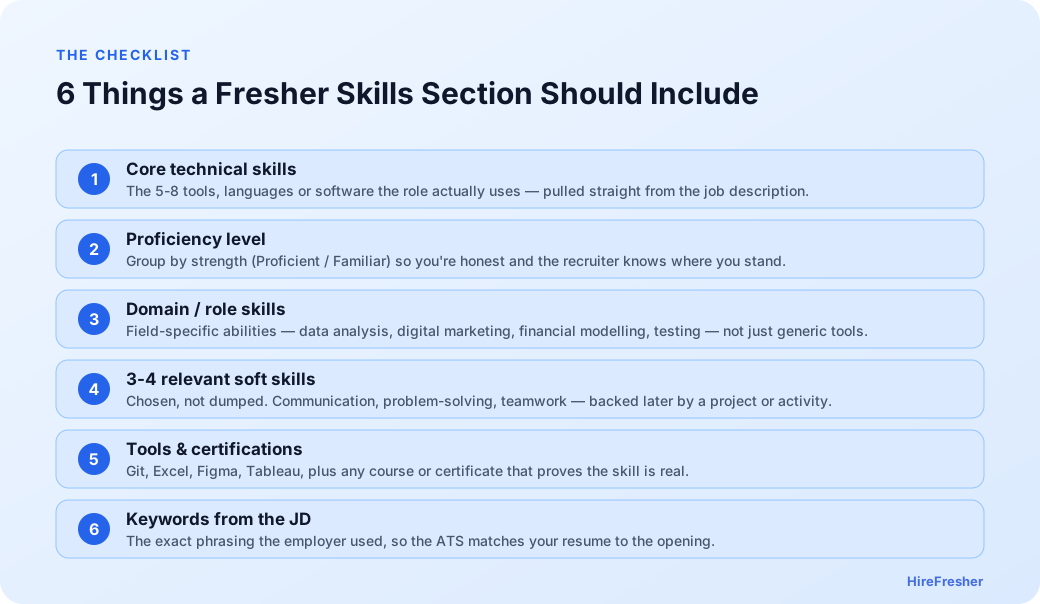
Don't guess. Open the job description and highlight every skill, tool and keyword it names. Those are the exact terms the recruiter and the ATS are looking for. If the JD says 'SQL, Power BI, data visualisation', those three phrases should appear on your resume — assuming you genuinely have them.
This is called tailoring, and it's the single highest-return edit you can make. A generic skills list might match 20% of a role; a tailored one matches 70-80%. Run your draft through our free ATS checker to see which JD keywords you're missing before you apply.
One honesty rule: only list what you can defend in an interview. If you write 'advanced Python' and freeze on a basic loop question, you've lost the recruiter's trust in everything else on the page.
Skills by stream: quick reference for Indian freshers
The right skills depend on your background and target role. Here's a starting point — trim it to the specific job you're applying for.
- B.Tech / Computer: Java, Python, SQL, Data Structures, HTML/CSS, Git, OOP concepts, one framework (React/Spring).
- Data / Analytics: Excel (advanced), SQL, Power BI or Tableau, basic statistics, Python for data.
- B.Com / Commerce: Tally, advanced Excel, GST basics, financial analysis, accounting standards.
- Marketing: SEO, Google Analytics, social media, content writing, Canva, email marketing.
- Mechanical / Civil: AutoCAD, SolidWorks, MS Project, GD&T, relevant simulation tools.
Where to put skills — and how to format them
For freshers, put a dedicated 'Skills' section high up, right after your career objective or summary. Recruiters expect to find it fast. Use a clean, scannable layout — grouped by category, not one long comma-jumble.
Group your skills so the section reads in two seconds: 'Programming: Java, Python, C++', 'Tools: Git, VS Code, MySQL', 'Soft Skills: Communication, Teamwork, Problem-solving'. This structure helps both the human skim and the ATS parse. Avoid graphics like star ratings or skill bars — most ATS software can't read them and they add visual noise.
Beyond the skills box, prove your top skills inside your projects. A line like 'Built a library management system in Java using MySQL' is worth more than the word 'Java' sitting alone. See how to write project descriptions that showcase skills with real outcomes.
Skills to skip (they hurt more than help)
Some 'skills' are so common they've become invisible — or they actively signal that you padded the list. Cutting these makes the strong ones stand out.
Every line on a one-page fresher resume is expensive real estate. If a skill isn't relevant to the role or provable in an interview, it's costing you space that a genuine, matched skill could use.
- Vague clichés with no backing: 'hardworking', 'dedicated', 'quick learner' on their own.
- Obvious basics: 'MS Word', 'internet browsing', 'email' — assumed for any graduate.
- Skills unrelated to the job you're applying for (a random 'video editing' on a backend role).
- Rating your own soft skills out of 10 — it reads as filler.
- Anything you can't demonstrate — inflated proficiency gets exposed fast in interviews.
A quick before/after
Before: 'Skills: Hardworking, MS Office, Communication, Team player, Java, Programming, Good learner.' It's generic, mixes fluff with real skills, and matches almost no job description.
After: 'Programming: Java, Python, SQL | Web: HTML, CSS, React | Tools: Git, MySQL, VS Code | Soft skills: Communication, Teamwork, Problem-solving.' Same person — but now it's grouped, specific, ATS-readable and clearly aimed at a software role. That's the difference between getting filtered out and getting a call.
Want the full structure around this section? Our ATS resume format for freshers guide shows exactly where skills sit relative to your objective, education and projects.
The One Thing We See Most
When it comes to skills, the most common fresher mistake isn't listing too few — it's listing the wrong ones. People list the same ten generic words on every application, then wonder why nothing gets shortlisted.
The resumes that get callbacks do one thing differently: they rewrite the skills section for each role, mirroring the language of that specific job and cutting anything they can't defend. It takes ten extra minutes per application. Build and preview your resume free on our free resume builder for freshers, match your skills to the JD, and you'll clear the first filter far more often.
7 ready-to-use skill sets by role
Copy the set that matches your target role, then keep only the skills you can actually defend in an interview:
- Java Developer (fresher): Java, Spring Boot, MySQL, REST APIs, Git, Data Structures & Algorithms, JUnit basics.
- Frontend Developer: HTML, CSS, JavaScript, React, Tailwind CSS, Git, responsive design, REST API integration.
- Data Analyst: Excel (VLOOKUP, pivot tables), SQL, Python (Pandas), Power BI or Tableau, basic statistics, data cleaning.
- Digital Marketing: SEO basics, Google Analytics, Meta Ads Manager, content writing, Canva, email marketing, keyword research.
- QA / Software Testing: manual testing, test case design, Selenium basics, JIRA, SQL, API testing with Postman, bug reporting.
- Accountant / Finance: Tally ERP, MS Excel, GST filing basics, bank reconciliation, accounts payable/receivable, financial statements.
- HR / Recruitment: MS Office, job posting & sourcing, resume screening, interview coordination, HRMS basics, Excel trackers.
FAQs
How many skills should a fresher list on a resume?
Aim for 8-12 relevant skills, grouped into 2-3 categories like technical, tools and soft skills. Quality and relevance beat a long list — every skill should match the job or appear in your projects.
Should freshers list soft skills or technical skills first?
List technical skills first for most roles, since they're what the ATS and recruiter check for. Add 3-4 relevant soft skills after, ideally ones you can back up with a project, internship or college activity.
What are the best skills for a fresher with no experience?
The best skills are the ones the job description asks for that you genuinely have — often role tools (Excel, SQL, Java, Canva) plus a few provable soft skills. Tailor the list to each application instead of using one generic set.
Are skill rating bars or star ratings good on a fresher resume?
No. Most ATS software can't read graphics, and self-assigned ratings look like filler. Use plain text grouped by category, and demonstrate proficiency through your projects and certifications instead.
How do I know which skills to add for a specific job?
Read the job description, highlight every tool and skill it names, and add the ones you actually have using the same wording. Then run your resume through an ATS checker to spot missing keywords before applying.
Build your resume free
Create your free ATS-friendly resume in minutes using our free resume builder.
Create free resumeJob Alerts
Get new resume tips & fresher job-prep guides — free, no email needed.