
Self Introduction for Experienced Candidates
12 Jul 2026 · 9 min read
Written by Anil Sahu · Reviewed by Ritesh Panda
Last reviewed: 12 Jul 2026
When you're a fresher, your self introduction leans on your degree and projects. But once you have a year or more of experience, that same approach makes you sound junior. Experienced candidates need to lead with their role and results, not their college.
This guide shows experienced candidates exactly how to reshape the introduction, with ready samples for 1–10 years of experience. If you're still early, our self introduction for interview guide covers the fresher version.

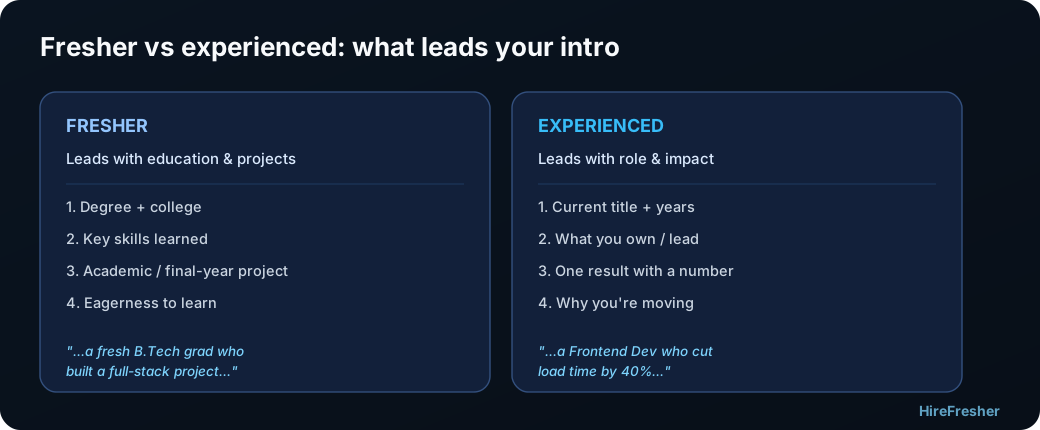
Fresher vs experienced: what leads your introduction
The difference is what you put first. A fresher opens with education and projects because that's their strongest material. An experienced candidate opens with their current role and a concrete result, because work impact now carries more weight than a degree.
Everything else — keeping it to 60–90 seconds, ending on why you want this role — stays the same. Only the opening emphasis shifts.
The experienced self introduction formula
Reshape the four parts to put your experience first:
- Role + years — 'I'm Karan, a Frontend Developer with about two years' experience.'
- What you own — the area or product you're responsible for.
- One result with a number — the impact you've had, quantified.
- Why you're moving — what this new role offers that you want.
Sample: 1–2 years of experience
'Hi, I'm Karan Mehta, a Frontend Developer with about two years at a product startup. I own our customer dashboard, and last year I rebuilt it in React and cut load time by 40%, which lifted daily active users by 15%. I'm looking to move into a role with a bigger design-system focus, which is exactly what this position offers.'
Notice how work results carry the whole introduction — no mention of college is needed. The number (40%) makes it credible.
Sample: 3–5 years of experience
'I'm Divya Rao, a Business Analyst with four years across two fintech companies. I lead requirement gathering for our payments product, and I recently ran an analysis that reduced failed transactions by 12% by fixing a retry flow. I'm keen on this Senior Analyst role because I want to own a product area end to end.'
At this level, add a hint of scope — 'lead', 'own', 'across two companies' — to signal you're ready for more responsibility.
Sample: career switcher with experience
Switching fields? Acknowledge your background, then bridge to the new role: 'I'm Sneha Reddy. I spent three years in operations, where I automated our monthly reporting and saved about ten hours a week. I've since completed a data analytics program and built two Power BI dashboards on real datasets. I'm moving into data analysis because turning numbers into decisions is the part of my old job I enjoyed most.'
The key is to frame past experience as transferable, not wasted — then land on genuine enthusiasm for the switch.
Experienced dos and don'ts
Keep your introduction sharp with these:
- Do lead with your current title and years of experience.
- Do include one result with a number — impact over responsibilities.
- Do end on why you're moving, framed positively.
- Don't recite your education first — it signals you have little else.
- Don't badmouth your current or past employer.
- Don't list every project — pick the one that fits this role.
Match your resume to your introduction
At HireFresher we mostly help freshers, but the principle is universal: your self introduction and your resume should tell the same story. The result you mention out loud should be the one that leads your resume's most recent role.
So make sure your resume leads with impact too — quantified bullets, most recent role first. If you're refreshing it, our self introduction examples guide has more sample lines you can adapt across situations.
More self-introduction scripts by role & experience
Adapt the one closest to your role — keep it to 45–60 seconds, lead with your title and years, and land one number.
- Customer support (~1 year): "I'm Ankit, a customer-support associate with about a year at a SaaS company. I handle around 50 tickets a day over chat and email and hold a CSAT of 92%. I've also written 15 help-desk articles that cut repeat queries on billing. I'm looking to move into a customer-success role where I work with clients more closely."
- Manual → automation QA (2 years): "I'm Deepa, a QA engineer with two years in manual testing for a fintech app. I own regression for the payments module and recently cut our release-testing time by about 30% by scripting 60 smoke tests in Selenium. I'm moving into an automation-QA role because that's the direction I've been upskilling toward."
- Sales / business development (3 years): "I'm Rahul, a business-development executive with three years in B2B SaaS sales. I manage a pipeline of about 40 accounts and closed ₹1.2 crore in new business last year, 118% of target. I'm looking for a senior BD role with a larger enterprise portfolio."
- Digital marketing (2 years): "I'm Sana, a performance-marketing executive with two years running Meta and Google Ads for a D2C brand. I manage a monthly budget of around ₹8 lakh and improved ROAS from 2.1x to 3.4x over six months. I'm keen to join a team where I can own the full funnel, not just paid."
- Backend developer (4 years): "I'm Vivek, a backend developer with four years in Java and Spring Boot. I own the order-service for an e-commerce platform doing ~2 lakh orders a day, and I brought a key API's p95 latency down from 800ms to 220ms. I'm looking for a role with more system-design ownership."
- Accountant (3 years): "I'm Meera, an accounts executive with three years' experience in a manufacturing firm. I handle GST filing and monthly closing for two entities, and I automated our bank reconciliation in Excel, saving about 8 hours a month. I'm looking to grow into a senior-accounts or finance-analyst role."
- HR recruiter (2 years): "I'm Farhan, a recruiter with two years in IT hiring. I close around 8 positions a month and brought our average time-to-hire down from 45 to 31 days by revamping the screening process. I'm looking for a role where I can also work on employer branding."
FAQs
How should an experienced person introduce themselves in an interview?
Lead with your current title and years of experience, say what you own, add one result with a number, and end with why you're moving. For example: 'I'm [Name], a [role] with [X] years; I [achievement with a number], and I'm looking for [what this role offers].' Keep it to 60–90 seconds.
How is an experienced self introduction different from a fresher's?
A fresher leads with education and projects; an experienced candidate leads with their current role and a measurable result. The structure and length are the same — only the opening emphasis changes.
How do I introduce myself when switching careers?
Acknowledge your background as transferable, mention a relevant result from it, then bridge to your new skills and why you're switching. Frame the past as useful, not wasted, and end on genuine enthusiasm for the new field.
Should experienced candidates mention their college in a self introduction?
Usually no. With a few years of experience, your work results matter more than your degree. Lead with your role and impact; mention education only briefly, if at all.
Build your resume free
Create your free ATS-friendly resume in minutes using our free resume builder.
Create free resumeJob Alerts
Get new resume tips & fresher job-prep guides — free, no email needed.