
How to Write a Resume Summary for Freshers (With Examples)
15 Jul 2026 · 8 min read
Written by Anil Sahu · Reviewed by Ritesh Panda
Last reviewed: 15 Jul 2026
Recruiters spend about six seconds scanning a resume before deciding whether to read further — and the first thing most of them land on is the summary at the top. If that block of text is generic ("hardworking fresher seeking opportunities to grow"), you've already lost the six seconds.
A resume summary for freshers is not the same as an objective, and writing a good one doesn't require work experience — it requires being specific about what you already have: your degree, your skills, and one thing you've actually done. Here's the formula, real examples, and the mistakes that make summaries sound copy-pasted.
Resume Summary vs Objective: What's the Difference
Most freshers write an objective without realising it — a line about what they want ("seeking a challenging role where I can learn and grow"). Recruiters don't care what you want in the first three seconds; they care what you can do.
A summary flips the direction. It states who you are and what you bring, in 3-4 lines, right under your contact details. Think of it as your elevator pitch, not your wish list. If you're still deciding between the two formats, career objective for freshers covers when an objective still makes sense — but for most 2026 fresher resumes, recruiters and ATS software respond better to a summary that leads with skills.
A Quick Example: Rewriting a Generic Summary
Suppose a B.Com fresher's first draft reads: "Hardworking and dedicated graduate seeking an opportunity in a reputed organisation to utilise my skills and grow professionally." It's technically complete, and says nothing that couldn't apply to any of the other 40 people applying for the same job.
Rewritten with the formula, it becomes: "B.Com graduate (2026) with hands-on skills in Tally, GST filing, and Excel from a 2-month internship at a local CA firm, where I helped close monthly reconciliations for 15+ client accounts. Looking to bring the same attention to detail to an entry-level accounts role." Same person, same lack of full-time experience — but now there's a degree, two tools, one number, and one outcome a recruiter can actually picture.
The Formula: 3-4 Lines That Actually Work
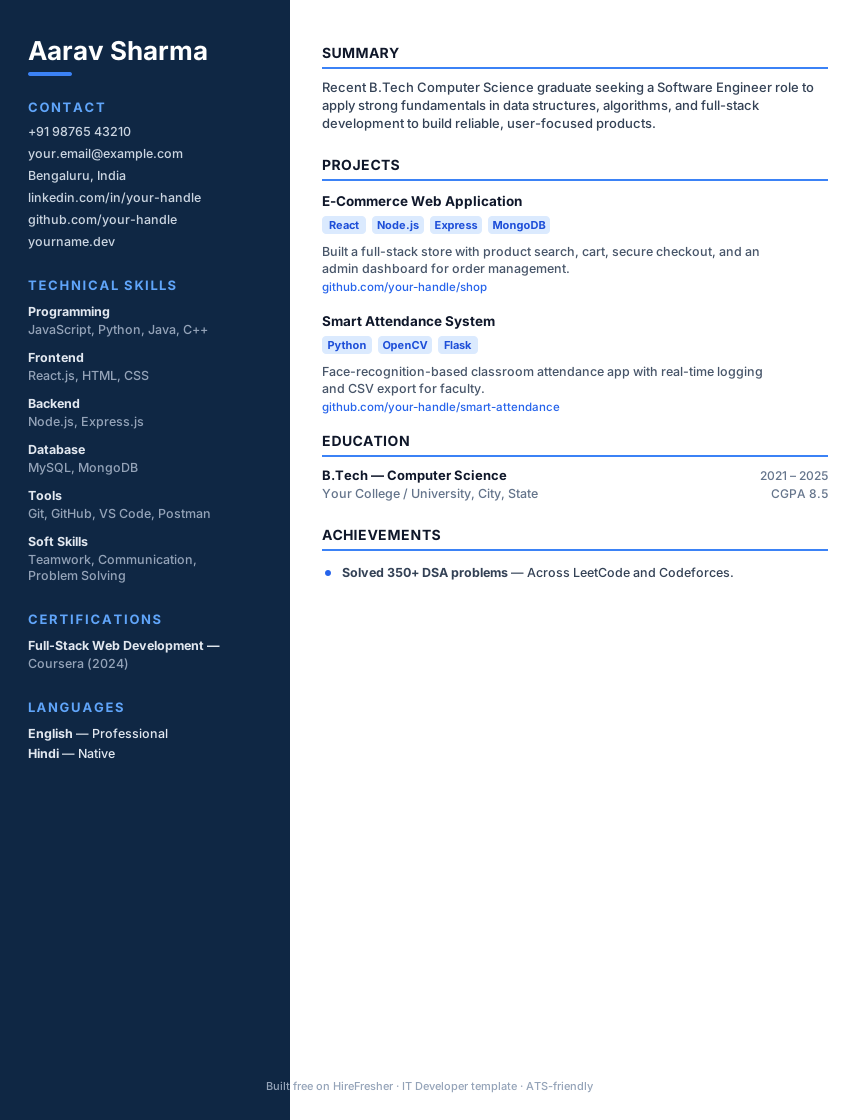
Stack these four pieces in order and you get 3-4 lines that read like a specific person, not a template:
Keep the whole thing under 50 words — a summary that runs into a paragraph stops being a summary.
- Who you are: your degree, branch, and year (e.g. "B.Tech CSE 2026 graduate")
- What you know: 2-3 real skills or tools relevant to the job, not a skill dump
- What you've done: one project, internship, or academic achievement with a number if possible
- What you bring: one line connecting your skills to the role you're applying for
7 Resume Summary Examples for Freshers
Swap in your own branch, tools, and one real project — the structure below works across streams:
- B.Tech CSE: "B.Tech CSE 2026 graduate skilled in Java, React, and MySQL. Built a full-stack attendance tracker used by 3 college clubs as a final-year project. Looking to apply strong fundamentals to an entry-level developer role."
- BBA: "BBA graduate (2026) with hands-on experience in MS Excel, market research, and social media reporting from a 6-week internship at a D2C startup, where I helped track campaign performance across 4 channels. Eager to bring an analytical approach to a marketing trainee role."
- B.Com: "B.Com graduate with working knowledge of Tally, GST filing, and financial reporting, built during a college project auditing a mock company's books. Looking for an entry-level accounts or finance role."
- Mechanical Engineering: "B.E. Mechanical 2026 graduate proficient in AutoCAD and SolidWorks, with a final-year project on a low-cost solar water pump that reduced material cost by 18%. Seeking a design or production trainee role."
- Arts/no technical background: "B.A. English graduate with strong written communication skills, developed through 2 years as a college magazine editor and a student-run content team of 5. Looking to apply this to a content or communications role."
- MCA / data: "MCA graduate (2026) skilled in Python, SQL, and Power BI, with a capstone project analysing 12 months of retail sales data to flag the top 3 loss-making product lines. Seeking an entry-level data analyst role."
- Diploma (polytechnic): "Diploma in Electrical Engineering with hands-on lab experience in PLC wiring and panel testing, plus a 3-month apprenticeship at a local manufacturing unit. Looking for a junior electrical technician role."
Common Mistakes That Make Summaries Sound Fake
A summary can be technically correct and still sound fake. Here's what usually gives it away:
- Buzzwords with no proof — "hardworking", "quick learner", "team player" used without a project or number backing them up
- Copy-pasting the same 3 lines from a template you found online — recruiters who read 200 resumes a week recognise the same sentence instantly
- Writing it before you've decided what job you want — a summary that could apply to any role usually ends up applying to none
- Ignoring the job description — if the JD says "Excel" and "client communication", your summary should use those exact words, because ATS software and many recruiters scan for them (see how ATS reads your resume)
Where the Summary Fits in Your Resume Layout
The summary sits directly below your name and contact details, above education and skills — it's the first block of actual content a recruiter or an ATS parser reads. On a one-page fresher resume, that's prime real estate; don't waste it on an objective sentence you could delete without losing any information.
If you're not sure your current layout puts it in the right place, check it against an ATS-friendly resume format for freshers or build one from scratch with our free resume builder — the summary field is placed correctly by default, and you can run the finished resume through the ATS checker before you apply.
Tailoring Your Summary for Each Job You Apply To
Freshers often write one summary and paste it into every application. It saves time, but it's also why response rates stay low. Before you submit, reread the job description and swap in 1-2 keywords that match — if a JD asks for "data analysis using Excel and SQL" and your resume only says "analytical skills", you're leaving an easy match on the table.
The same logic applies to the project description section further down the resume — keep the language consistent between the two so the whole resume tells one coherent story instead of two disconnected ones.
The One Thing We See Most
The single biggest mistake in a fresher summary is that it could belong to anyone — no branch, no skill, no number, just adjectives. The resumes that get shortlisted almost always name something specific in the first line: the degree, the tool, the one project that's actually finished.
You don't need work experience to write a summary that sounds like you; you need three specific facts and the discipline to cut everything that isn't one of them.
FAQs
What is a good resume summary for a fresher with no experience?
A good summary states your degree/branch, 2-3 real skills, one project or internship with a number if possible, and one line on what you bring to the role — no experience is needed, just specific facts about what you've already done.
How long should a resume summary be?
Keep it to 3-4 lines, roughly 40-50 words. Anything longer starts reading like a paragraph and recruiters skim past it.
Should freshers use a summary or an objective?
A summary works better for most fresher resumes in 2026 because it leads with skills and achievements rather than what you want from the job. See career objective for freshers for the cases where an objective still makes sense.
Can I use the same summary for every job application?
You can reuse the structure, but swap in 1-2 keywords from each job description before you apply — it's a two-minute edit that noticeably improves your match rate with both ATS software and recruiters.
Where should the summary go on my resume?
Right below your name and contact details, above education and skills. It should be the first block of content a reader sees on the page.
Build your resume free
Create your free ATS-friendly resume in minutes using our free resume builder.
Create free resumeJob Alerts
Get new resume tips & fresher job-prep guides — free, no email needed.