
Digital Marketing Resume for Freshers (2026)
19 Jul 2026 · 8 min read
Written by Anil Sahu · Reviewed by Ritesh Panda
Last reviewed: 19 Jul 2026
Digital marketing is one of the easiest fields for a fresher to break into — you can learn most of it online for free and prove it publicly. But that low barrier is also the problem: recruiters see hundreds of near-identical resumes claiming the same skills, so yours has to show real, measurable ability.
This guide covers how to build a digital marketing resume for freshers that actually stands out: the right skills and tools, certifications that carry weight, a simple portfolio you can build this week, and — most importantly — the metrics that turn a generic resume into a shortlist.
What Makes a Digital Marketing Resume Work
Marketing is a results field, so your resume should read like proof, not a wish list. Recruiters (and the ATS) scan for specific channels, tools, and outcomes. A clean, single-column layout keeps every keyword readable, and a number beside each skill is what separates you from everyone else claiming 'good at social media'. (Formatting basics: What Is an ATS Resume?)
Here's the mindset shift that wins interviews: don't list what you know, show what you moved. Traffic, click-through rate, followers, open rate, leads — a real number beside a channel is instantly more credible than a paragraph of adjectives. Check your draft with the free ATS checker so nothing important gets dropped.
Show the Channel — and the Metric That Proves It
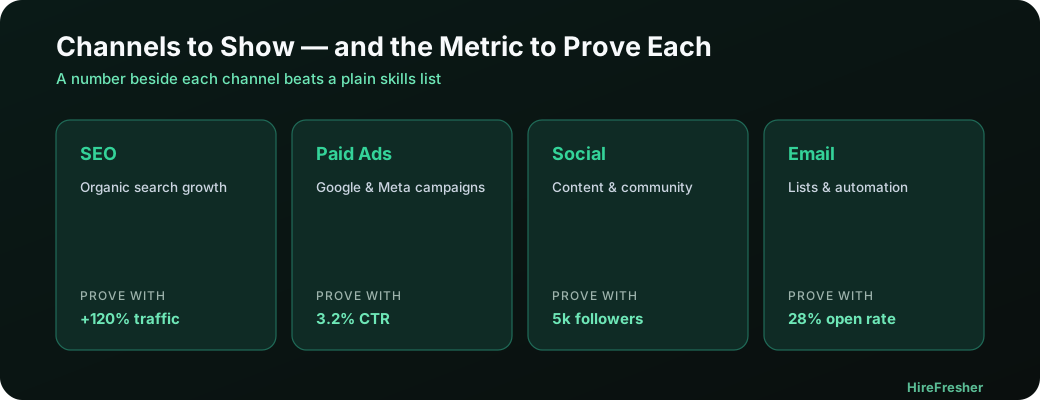
The clearest way to structure a digital marketing resume is by channel, each paired with a metric that proves you can move it. Even small, personal numbers count — they show you understand how the channel is measured.
Skills, Tools & Certifications
- Skills: SEO, SEM/PPC, social media, email marketing, content, basic copywriting.
- Tools: Google Analytics, Search Console, Google Ads, Meta Ads Manager, Canva.
- Certifications: Google Digital Garage, Google Ads, Meta Blueprint, HubSpot.
- Roles: Digital Marketing Executive, SEO Analyst, Performance Marketing Trainee.
Build a Portfolio That Does the Talking
The fastest way to beat more experienced-looking applicants is evidence. You do not need a client — you need a project. Start a simple blog and grow it with SEO, run a tiny ad campaign with your own budget, or grow a niche social handle. Then put the numbers on your resume: 'Grew a personal blog to 2,000 monthly visits in 3 months via SEO', or 'Ran a ₹2,000 test campaign at a 3.2% CTR'.
Frame each with the action + tool + result structure, and link the live blog or handle so recruiters can see it. A working portfolio, even a small one, tells a hiring manager you'll figure things out on the job — which is exactly what they're betting on with a fresher.
Mistakes to Avoid
- A skills list with zero numbers — attach a metric or a portfolio link to each channel.
- Over-designed 'creative' resumes with graphics — they break ATS parsing. Stay clean and single-column.
- Listing every tool ever opened — keep to the ones you can demonstrate.
- No link to actual work — a live blog, handle, or campaign is your strongest asset.
A 2-Week Plan to Build a Portfolio From Zero
You don't need months to have something worth putting on a digital marketing resume. Two focused weeks are enough to generate real, measurable proof that beats a page of certifications.
Week 1 — Pick one channel and start: launch a simple blog on a niche you know and publish 3-4 SEO-optimised posts, or set up a themed Instagram/LinkedIn page and post consistently. Set up Google Analytics and Search Console on day one so you're measuring from the start. Week 2 — Run a small experiment: try a ₹500-1,000 Google or Meta ad campaign, or run an outreach push to grow your page, and track every number.
By the end you'll have a live link and real metrics — 'grew a blog to 1,500 visits', 'ran a campaign at 3% CTR'. That single portfolio line does more for a fresher than any list of tools, because it proves you can actually run the channel, not just name it.
When you write it up, use the channel-plus-metric format from earlier: name what you did, the tool you used, and the number you moved. Then link it — recruiters for marketing roles genuinely click through to see real work.
Final Tips
Keep it single-column and ATS-safe, lead with skills and tools, and back every claim with a number or a portfolio link. That combination reads as 'already doing the job', which is what gets a fresher shortlisted.
Build your digital marketing resume free on HireFresher and check it with the ATS checker. For layout inspiration, browse our fresher resume examples.
FAQs
How do I make a digital marketing resume with no experience?
Learn the tools, get a free certification (Google Digital Garage, HubSpot), and build proof — a small blog, a test ad campaign, or a social handle — then put the metrics on your resume. Evidence beats a job title you don't have yet.
Which certifications help a fresher digital marketing resume?
Google Digital Garage and Google Ads certifications, Meta Blueprint, and HubSpot are widely recognised and free or low-cost. List the ones you hold, matched to the role's keywords.
What skills should be on a digital marketing resume?
SEO, SEM/PPC, social media, email, and content — plus tools like Google Analytics, Search Console, Google Ads, and Meta Ads Manager. Only list what you can demonstrate.
Do I need a portfolio for a digital marketing job?
It helps a lot. A blog, a live social handle, or a small campaign with real numbers gives recruiters proof of skill and sets you apart from generic resumes.
What metrics should I put on a digital marketing resume?
Channel-specific ones: organic traffic growth for SEO, CTR for ads, follower growth for social, and open rate for email. Even small personal-project numbers show you understand how the channel is measured.
Build your resume free
Create your free ATS-friendly resume in minutes using our free resume builder.
Create free resumeJob Alerts
Get new resume tips & fresher job-prep guides — free, no email needed.